Key Highlights
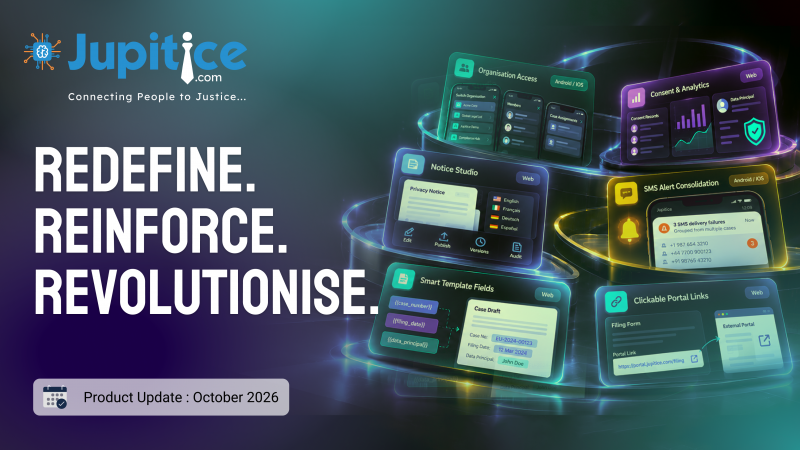
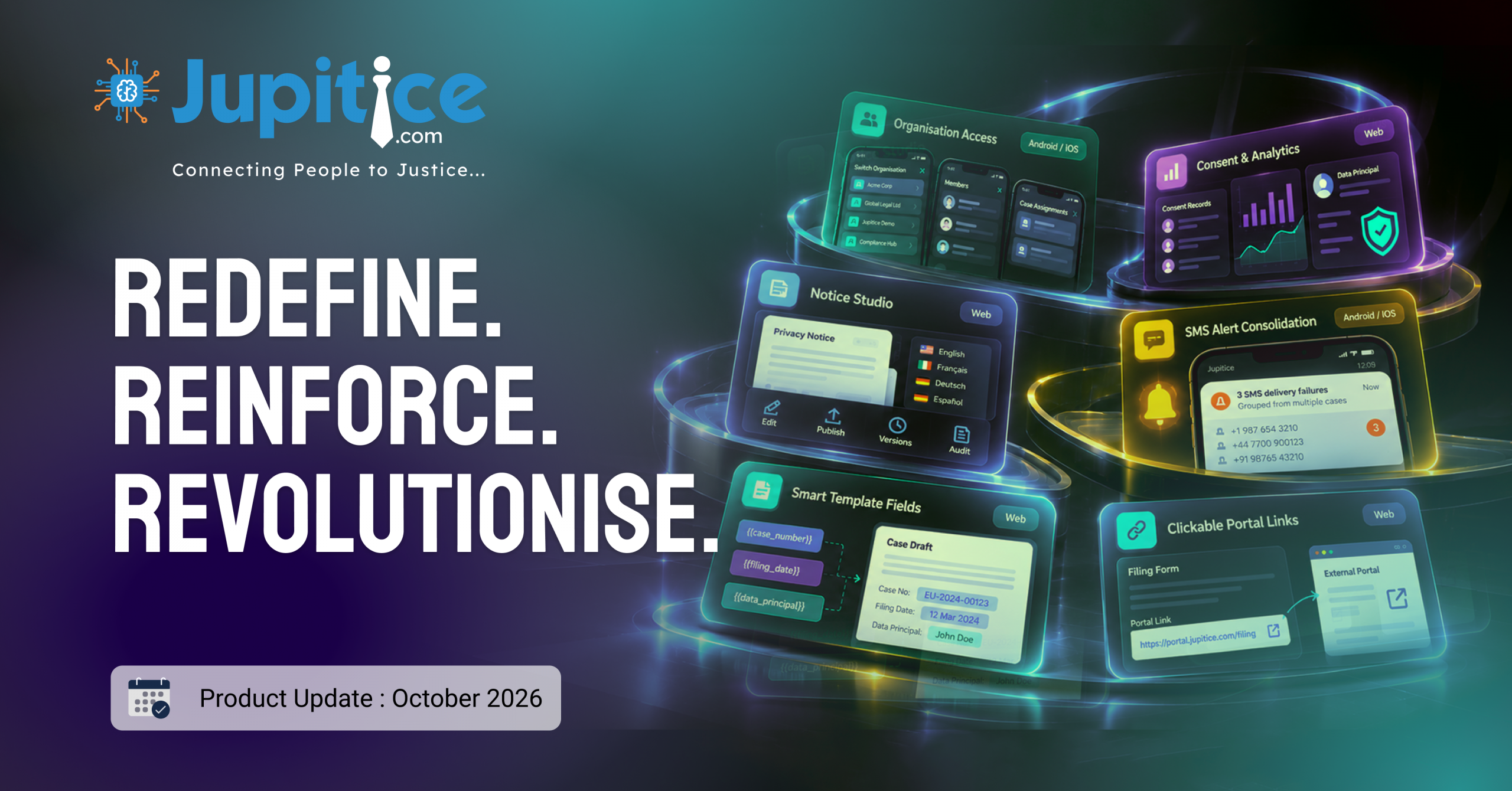
- Notice Studio: Notice Creation, Version Control & Lifecycle Management (Web): We have implemented Notice Studio to streamline privacy notice creation, multilingual editing, publishing, version control, expiry management, and audit tracking through a secure, organisation-scoped workflow.
- Organisation-Based Access and Membership Management (Android/iOS): We have implemented an organisation-first access model in DLO, replacing Team-based access with secure Organisation memberships, multi-Organisation switching, membership-based case assignments, and validated data migration across web and mobile platforms.
- Consent Management, Analytics & Data Principal Dashboard (Web): We have implemented Consent Hub, Consent Analytics, and the Data Principal Dashboard to centralise consent management, identify compliance gaps, maintain verifiable evidence, and provide unified access to individual records and audit history.
- DPO Consent Requests: Duplicate SMS Delivery Alert Handling (Web): We have implemented duplicate SMS alert handling to consolidate repeated delivery failure notifications and provide Data Principals with a clearer view of distinct delivery issues.
- DLO Custom Template Placeholders (Android/iOS): We have implemented Organisation-specific custom placeholders in DLO templates, enabling dynamic Case Draft fields, automatic data population, draft value persistence, required-field validation, and audit tracking while maintaining backward compatibility and Organisation-level data isolation.
- Make Portal URLs Clickable in Filing Forms (Web): We have implemented clickable portal URLs in the Filing Forms module, enabling seamless navigation to external portals in new browser tabs while preserving the original application page and maintaining accessibility and existing functionality.
Notice Studio: Notice Creation, Version Control & Lifecycle Management (Web)
We have implemented Notice Studio as a replacement for the legacy Notice module, providing a structured workflow for creating, reviewing, publishing, and managing privacy notices. The module features a guided six-step editor, multilingual content with AI-assisted Hindi translation, purpose-based data processing details, retention settings, and a Data Principal preview. It also supports notice versioning, change comparisons, publication snapshots, expiry management, and audit history. The implementation includes organisation-scoped APIs, access controls, purpose-retirement safeguards, and automated expiry handling. Realistic demo data, database audit fields, and comprehensive server-side regression tests have also been added to support reliable operation, data integrity, and traceability throughout the notice lifecycle.
Organisation-Based Access and Membership Management (Android/iOS)
We have implemented an organisation-first access model in DLO, replacing the legacy Team-based structure with Organisation memberships across the database, APIs, backend, web, and mobile applications. The updated workflow enables self-signup to create an Organisation administrator and allows invitations to activate Organisation membership. It also supports switching between multiple Organisations and restricts case assignments to active members of the selected Organisation. The implementation includes database migration, access-control updates, and corresponding API and test updates across web and mobile platforms. Rollback validation and data reconciliation have also been incorporated to verify migration integrity and support a consistent, secure transition to the Organisation-based architecture.
Consent Management, Analytics & Data Principal Dashboard (Web)
We have implemented Consent Hub, Consent Analytics, and the Data Principal Dashboard to establish an integrated framework for consent management, compliance monitoring, and individual record tracking. Consent Hub centralises consent requests, supports multiple communication channels, and enables staff-assisted recording of offline consent with supporting evidence. Consent Analytics provides key metrics, identifies potential compliance gaps, verifies consent record integrity, and generates audit reports. The Data Principal Dashboard consolidates individual identity details, consent records, rights requests, grievances, linked records, and activity history in one place. All three modules follow the platform’s organisation-scoped architecture and align with Notice Studio’s interface design for a consistent user experience. The implementation also includes bug fixes, supporting more structured, traceable, and accessible consent management.
DPO Consent Requests: Duplicate SMS Delivery Alert Handling (Web)
We have implemented duplicate alert handling in the consent request overview to prevent repeated SMS delivery failure notifications for the same consent request. Identical alerts are consolidated into a single notification, while distinct delivery failures can be differentiated through relevant timestamps and details. This implementation reduces unnecessary notification clutter, provides Data Principals with clearer visibility into SMS delivery issues, and simplifies the process of reviewing and resolving failures through the available Review and Resend action.
DLO Custom Template Placeholders (Android/iOS)
We have implemented Organisation-specific custom placeholders in DLO templates, enabling Organisation administrators to define additional fields, such as loan account numbers and agreement dates, without modifying the existing Case schema. Placeholder keys are automatically generated from their labels, with support for single-line text, multiline text, and repeatable groups containing text fields. When creating a Case Draft, the system dynamically displays only the placeholders used in the selected template, automatically populates built-in placeholders when the relevant data is available, and presents custom fields for manual entry. Entered values are saved with the draft and restored when it is reopened, ensuring continuity throughout the drafting process. Required-field validation ensures that mandatory values are provided before document generation, while the values used in the final document are retained in the generated-document metadata for audit purposes. The implementation maintains compatibility with existing templates and drafts without rewriting stored content, preserves Organisation-level data isolation, and leaves existing PDF generation and file-storage workflows unchanged. Currently, custom placeholders are supported within the Case Draft template workflow and do not extend to Legal Notice workflows.
Make Portal URLs Clickable in Filing Forms (Web)
We have implemented clickable portal URLs in the Filing Forms module to simplify access to external portals and eliminate the need for users to manually copy and paste web addresses into their browsers. Portal URLs are displayed as clearly distinguishable hyperlinks, allowing users to navigate directly to the corresponding websites with a single click. Each link opens the destination in a new browser tab, ensuring that the original application page remains open and users can easily return to their ongoing work. The implementation also addresses URL validation and appropriate handling of invalid or unavailable destinations, helping users identify and access valid portal links more efficiently. Existing Filing Forms functionality remains unchanged, while accessibility and compatibility across supported browsers and screen sizes ensure a consistent and user-friendly navigation experience.